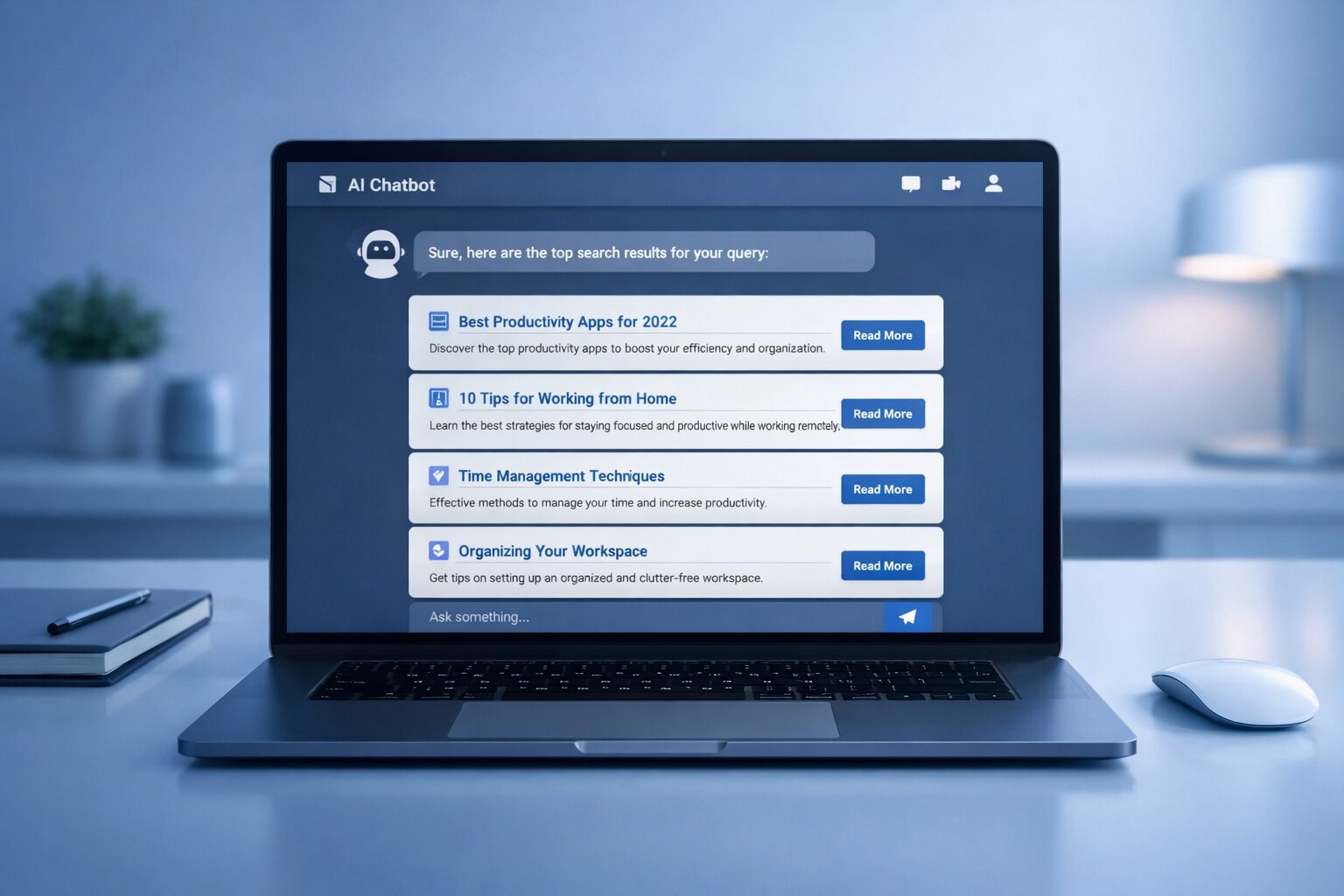
It has been a busy few weeks. OpenAI released GPT-4 on the 14th. Google opened Bard to people in the UK and US on Tuesday. Microsoft’s new Bing, with a chat mode built on OpenAI’s models, has been in preview since early February. And Google has quietly told us how it intends to treat all the AI-written content now heading its way.
Back in December I wrote some guesses about what ChatGPT would mean for 2023. Four months in, the question that keeps coming up is simpler than any of those predictions: is this a threat to what I do, or a tool I should be using? My honest answer is both, depending on what kind of content you make.
What Google actually said
On 8 February Google Search Central published a post on AI-generated content. The headline position is that Google rewards high-quality content however it is produced. Using AI or automation is not against its guidelines in itself. Using it with the primary purpose of manipulating rankings is, and that’s been covered by its spam policies for years.
A lot of people read that as permission. I read it as Google declining to fight a battle it can’t win. It cannot reliably tell whether a paragraph was typed by a person or generated by a model, so it has fallen back on judging the output. That puts the weight on the questions it was already asking: is this helpful, does it show real experience or expertise, would anyone miss it if it disappeared.
So the bar is roughly where it was, but producing something that sits just under it now costs almost nothing.
Where it’s a threat
Content that exists to answer a simple, factual question and nothing more. “What is a bounce rate.” “How many ml in a pint.” “When does Universal Analytics stop.” A chat interface answers those faster than an article does, and anyone with a ChatGPT login can now produce a 1,200-word article on the same question in about thirty seconds.
If a large share of a content plan is made up of these, two things squeeze it at once. More competition from sites pumping out near-identical pages, and fewer searches as some people ask a chatbot instead. I wouldn’t commission any more of that kind of piece this year.
Agencies that sell content by the word are also in an awkward spot. Clients can see what the tools produce, and it’s hard to keep charging the old rate for something that looks, on the surface, very similar.
Where it’s a tool
The places I find it useful are mostly unglamorous:
- Turning a messy set of notes into a first structure I can then rewrite
- Generating twenty headline variants so I can reject eighteen of them
- Summarising a long document or thread before I read it properly
- Rewriting the same message for different lengths and channels
- Writing small bits of code, regex and spreadsheet formulas
What these have in common is that I already know what I want to say, and I’m checking every line before it goes anywhere. It’s quick, and it’s also wrong quite regularly. GPT-4 seems better on that front than the version that launched in November, but it still invents things in a perfectly confident voice. Anything with a fact, a figure or a citation in it needs checking against a real source.
What it can’t do
It doesn’t know your customers. It hasn’t read your complaints inbox or watched someone struggle with your checkout, and it has never tried the product. The content that wins work and builds trust is usually built on exactly that sort of knowledge, and the model can only give you an average of what everyone else has already written.
That’s my main reason for not panicking. If your content is good because it contains something only you know, I’d expect it to hold up better as the pages around it get more generic.
What I’d do now
- Audit the plan. Split it into pieces that carry real knowledge and pieces that only restate what’s already out there. Cut or merge the second group.
- Write a usage policy. What can staff paste into these tools? Customer data, unreleased product details and internal figures probably shouldn’t go into a free service on someone else’s servers. I suspect most businesses still have nothing written down.
- Use it in the workflow, not as the author. Drafting help, yes. Publishing unedited output under your name, no.
- Keep an eye on search itself. Bing has already put chat answers next to its results. If Google does something similar in its main results, informational traffic is the first thing that changes.
The March core update started rolling out last week too, which makes it hard to tell what’s moving rankings at the moment. I’ll come back to this once it settles and Bard has had a few weeks in the wild.